Blog
Herbal Hair Oil for Healthy Hair: Benefits of Amla, Bhringraj, Shikakai & Traditional Herbs

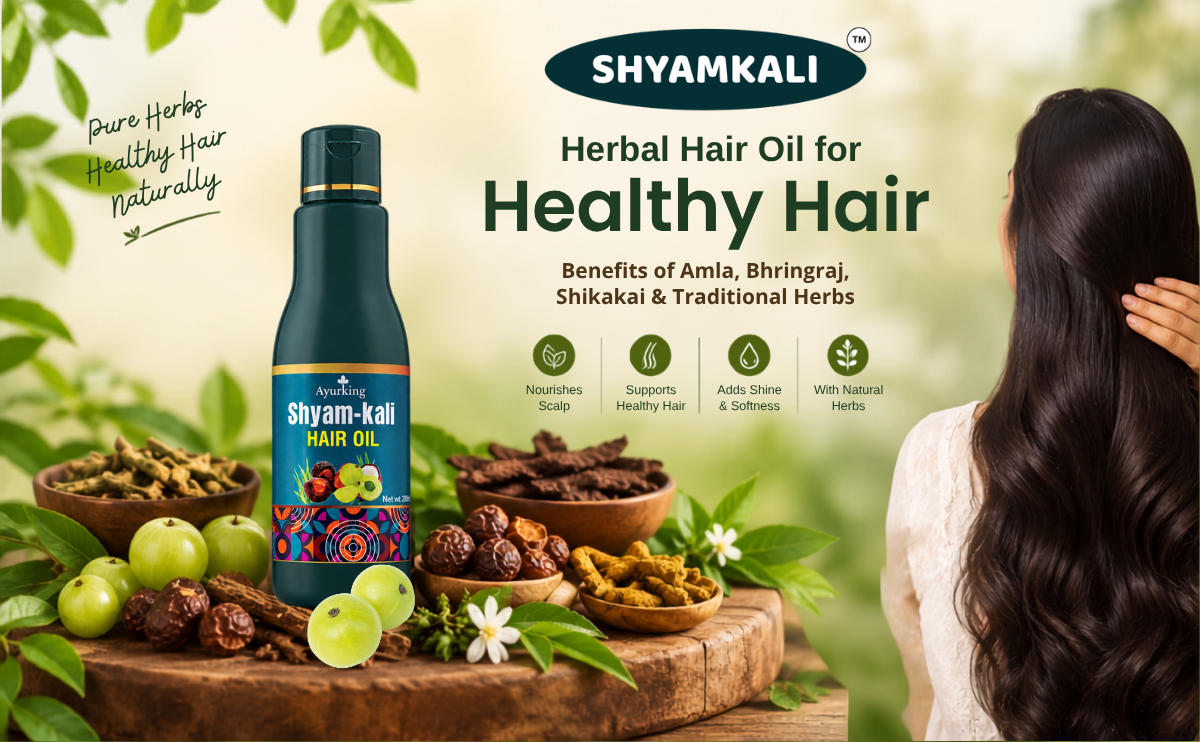
Healthy, beautiful hair starts with proper scalp and hair care. Regular oiling has been a traditional part of Indian hair-care routines for generations, and herbal hair oils continue to be popular among people looking for a natural way to nourish their scalp and hair.
Shyamkali Natural Hair Oil is made with a blend of traditional herbs and botanical ingredients, including Amla, Aritha, Shikakai, Bhringraj, Jethimadh, Valo, Kapur Kachli, Chanothi, Paneer and Daru Haldar, along with other carefully selected ingredients.
This herbal combination is designed to support a regular hair-care routine by nourishing the scalp, conditioning the hair, and helping maintain healthy-looking, soft and shiny hair.
What Makes Herbal Hair Oil Different?
Herbal hair oils combine traditional plant-based ingredients with an oil base to create a convenient hair and scalp care product.
Unlike using a single ingredient, a properly formulated herbal hair oil can bring together the traditional properties of several herbs in one routine.
The herbs used in Shyamkali Natural Hair Oil have traditionally been associated with:
- Scalp nourishment
- Hair conditioning
- Supporting healthy-looking hair
- Maintaining hair softness and shine
- Traditional scalp and hair care
- Regular head massage and relaxation
Key Ingredients Used in Shyamkali Herbal Hair Oil
One of the highlights of Shyamkali Natural Hair Oil is its combination of several traditional herbs.
1. Amla
Amla, also known as Indian Gooseberry, is one of the most widely used ingredients in traditional Indian hair care.
It is traditionally valued for its nourishing and antioxidant properties and is commonly used in hair oils and herbal hair preparations.
Amla is often included in hair-care routines to help maintain healthy-looking, shiny and conditioned hair.
2. Aritha
Aritha, commonly known as Soapnut, has a long history of use in traditional hair cleansing and care.
It contains naturally occurring saponins and is commonly associated with traditional cleansing practices.
In herbal hair formulations, Aritha is valued as a traditional ingredient for maintaining clean and fresh-feeling hair.
3. Shikakai
Shikakai is another well-known traditional Indian hair-care ingredient.
It has traditionally been used for cleansing and conditioning the hair and scalp.
Shikakai is often included in herbal hair-care preparations because of its gentle, traditional approach to hair cleansing and maintenance.
4. Bhringraj
Bhringraj is one of the most popular herbs associated with traditional Ayurvedic hair care.
It has traditionally been used in hair oils and scalp-care preparations.
Bhringraj is commonly included in herbal hair oils intended to support scalp nourishment and healthy-looking hair.
5. Jethimadh
Jethimadh, also known as Licorice, is traditionally valued for its soothing properties.
It is used in various traditional herbal preparations and can be included in hair-care formulations as part of a broader scalp-care routine.
6. Valo
Valo is a traditional herbal ingredient used in Indian preparations.
It is included in herbal formulations based on traditional practices and contributes to the overall botanical blend of the hair oil.
7. Kapur Kachli
Kapur Kachli is a traditional aromatic herb used in Indian herbal and personal-care preparations.
It is known for its distinctive natural aroma and has traditionally been used in hair-care preparations.
8. Chanothi
Chanothi is another traditional botanical ingredient used in herbal formulations.
Its inclusion adds to the diverse combination of herbs used in traditional hair-care preparations.
9. Paneer
Paneer, used as a traditional herbal ingredient in certain formulations, forms part of the botanical blend used in Shyamkali Natural Hair Oil.
10. Daru Haldar
Daru Haldar, also known as Indian Barberry, is a traditional botanical ingredient used in Ayurvedic and herbal preparations.
It is valued for its traditional properties and contributes to the overall herbal formulation.
Benefits of Using Herbal Hair Oil
Regular hair oiling can be a useful part of a healthy hair-care routine.
Depending on individual hair and scalp needs, herbal hair oil can help support:
Scalp Nourishment
Massaging hair oil into the scalp helps distribute the oil across the scalp and hair roots while providing a relaxing massage experience.
Hair Conditioning
Regular oiling can help make hair feel softer, smoother and more manageable.
Healthy-Looking Hair
A consistent hair-care routine can help maintain hair that looks healthy, naturally shiny and well-conditioned.
Dry Hair Care
Hair oil can help provide conditioning for dry or rough-feeling hair and can be particularly useful as part of a pre-wash routine.
Scalp Massage
Applying hair oil with a gentle massage can make your hair-care routine more relaxing while helping distribute the oil evenly across the scalp.
Traditional Herbal Hair Care
For people who prefer plant-based and traditional hair-care routines, herbal hair oil offers a convenient way to incorporate several traditional ingredients into regular hair care.
Who Can Use Herbal Hair Oil?
Herbal hair oil can be suitable for people looking to include oiling in their regular hair-care routine.
It may be especially useful for people who experience:
- Dry or rough-feeling hair
- Hair that looks dull or lacks shine
- A dry-feeling scalp
- Hair that needs regular conditioning
- People who enjoy traditional head-oiling routines
- People looking for a herbal hair-care option
However, everyone's hair and scalp are different. If you have a persistent scalp condition, severe hair loss, sudden hair thinning, or another medical concern, it is best to consult a qualified healthcare professional or dermatologist.
How to Use Shyamkali Natural Hair Oil
Using hair oil correctly can make your hair-care routine more effective and comfortable.
Step 1: Take an Appropriate Amount
Take a suitable amount of Shyamkali Natural Hair Oil according to the length and thickness of your hair.
Step 2: Apply to the Scalp
Apply the oil gently to the scalp using your fingertips.
Focus on distributing the oil evenly rather than using excessive pressure.
Step 3: Massage Gently
Massage your scalp gently with your fingertips for a few minutes.
Avoid scratching the scalp or applying excessive pressure.
Step 4: Apply Through the Hair
Spread the remaining oil through the lengths of your hair, particularly if your hair feels dry or rough.
Step 5: Leave It On
Allow the oil to remain on your hair for some time before washing.
For a traditional pre-wash routine, many people prefer applying hair oil before shampooing.
Step 6: Wash Your Hair
Wash your hair using a suitable shampoo and rinse thoroughly.
Shyamkali Natural Hair Oil is currently offered with a complimentary 100ml Shyamkali Shampoo as part of the listed 200ml hair-oil product.
How Often Should You Oil Your Hair?
There is no single frequency that works for everyone.
For a regular hair-care routine, you can oil your hair according to your hair type, scalp condition and personal preference.
People with dry hair may prefer more frequent oiling, while people with oily scalps may prefer less frequent application.
The important thing is to maintain a consistent routine without applying excessive amounts of oil.
Hair Oiling Tips for Better Results
Keep these simple tips in mind:
- Use an appropriate amount of oil.
- Massage the scalp gently with your fingertips.
- Avoid scratching your scalp with your nails.
- Focus on the scalp and hair lengths.
- Do not use excessive heat on your hair after oiling.
- Wash your hair thoroughly after your pre-wash oiling routine.
- Maintain a balanced diet and healthy lifestyle alongside your hair-care routine.
- Be consistent rather than expecting overnight results.
Herbal Hair Oil vs. Regular Hair Oil
The main difference between a traditional herbal hair oil and a basic hair oil can be the combination of botanical ingredients included in the formulation.
A herbal formulation may combine several traditional ingredients such as Amla, Bhringraj, Shikakai, Aritha, Jethimadh, Valo and Kapur Kachli in one product.
This makes it convenient for people who want a multi-herb approach to their regular hair-care routine.
Why Choose Shyamkali Natural Hair Oil?
Shyamkali Natural Hair Oil brings together multiple traditional herbal ingredients in one convenient hair-care product.
The current Shyamkali product listing describes the 200ml hair oil as being intended for hair-fall control, scalp nourishment and healthy hair growth, and it is listed under the site's Hair Care category.
Its herbal formulation includes ingredients such as:
Amla + Aritha + Shikakai + Bhringraj + Jethimadh + Valo + Kapur Kachli + Chanothi + Paneer + Daru Haldar
This combination makes it a suitable choice for people looking to add traditional herbal hair oiling to their regular personal-care routine.
Frequently Asked Questions
Is Shyamkali Hair Oil suitable for regular use?
Shyamkali Natural Hair Oil can be incorporated into a regular hair-care routine according to your hair type and personal preference.
Does herbal hair oil help with hair fall?
Hair fall can have many different causes. Regular oiling can support scalp and hair care, but it should not be considered a guaranteed treatment for medical causes of hair loss. If hair fall is persistent or severe, consult a qualified healthcare professional.
Can I use hair oil before shampooing?
Yes. Applying hair oil before shampooing is a common traditional hair-care routine. Massage the oil gently into the scalp and hair, leave it on for an appropriate period, and then wash thoroughly.
Can herbal hair oil be used on dry hair?
Yes. Hair oil can be used as part of a conditioning routine for dry or rough-feeling hair.
How long should I leave hair oil on?
The ideal duration depends on your hair type and routine. Many people use hair oil as a pre-wash treatment and wash their hair afterward.
Can I use herbal hair oil every day?
Daily oiling is not necessary for everyone. Choose a frequency that works for your hair and scalp. Using too much oil can make hair difficult to wash and may not provide additional benefits.
Build a Simple Natural Hair-Care Routine
Healthy-looking hair is not only about one product. A consistent routine can make a difference.
A simple routine can include:
Oil → Massage → Shampoo → Condition → Maintain
Start by applying a suitable amount of herbal hair oil and gently massaging your scalp. Follow with shampoo to cleanse the hair and scalp.
For best results, focus on consistency, gentle hair handling, adequate nutrition, hydration and overall healthy habits.
Explore Shyamkali Hair Care
Looking for a herbal hair-care product made with traditional ingredients?
Explore Shyamkali Natural Hair Oil and discover our approach to traditional herbal hair care.
You can also explore the complete Shyamkali Hair Care collection for more products and hair-care solutions.
For questions about our products, visit our Contact Us page.
Final Thoughts
Traditional herbs such as Amla, Bhringraj, Shikakai, Aritha, Jethimadh, Valo, Kapur Kachli and Daru Haldar have long been associated with Indian herbal and hair-care practices.
By bringing multiple traditional ingredients together in one formulation, Shyamkali Natural Hair Oil provides a convenient way to include herbal oiling in your regular hair-care routine.
Whether your goal is to maintain soft, shiny, conditioned and healthy-looking hair or simply enjoy a traditional scalp massage, making hair oiling a consistent part of your personal-care routine can be a simple step toward better everyday hair care.